
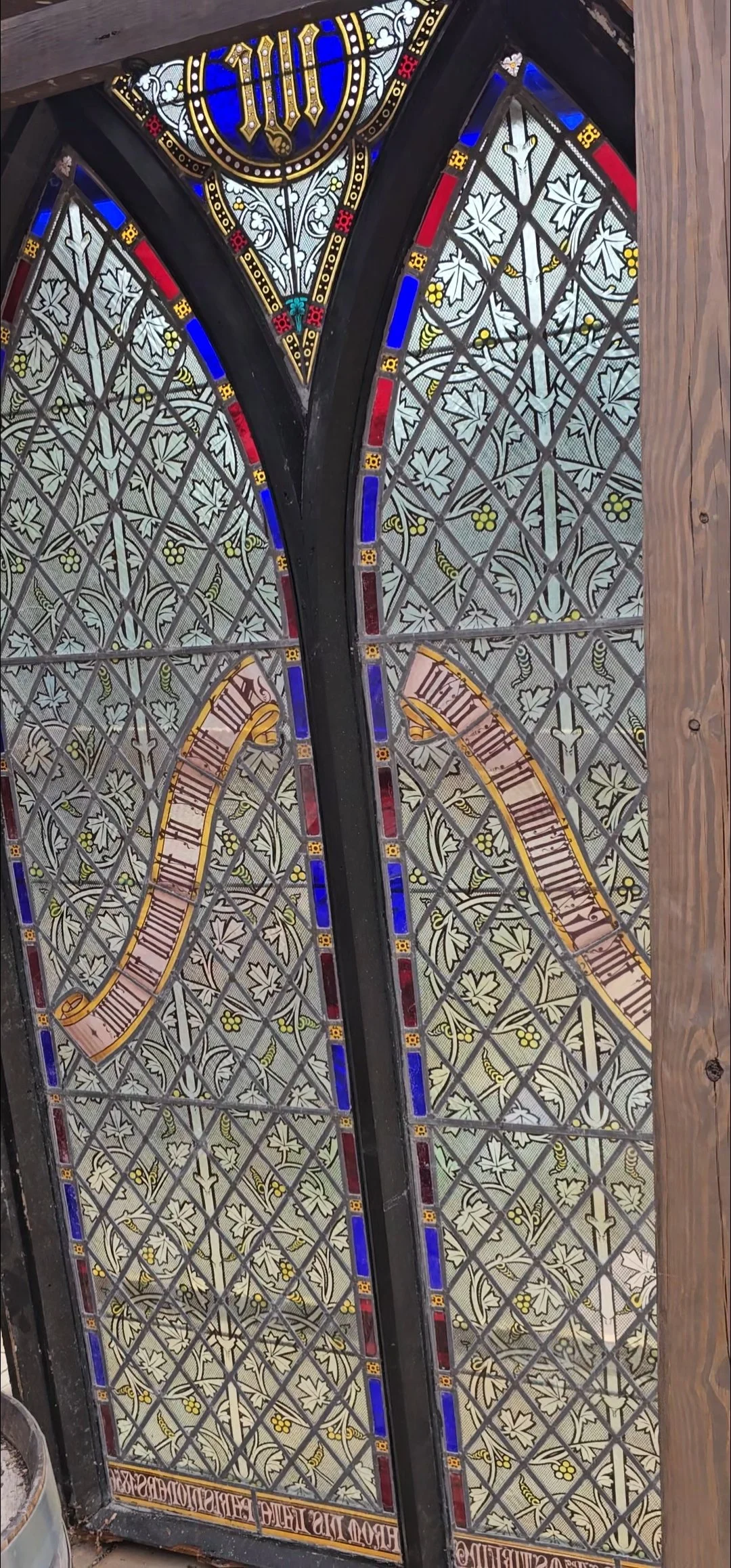

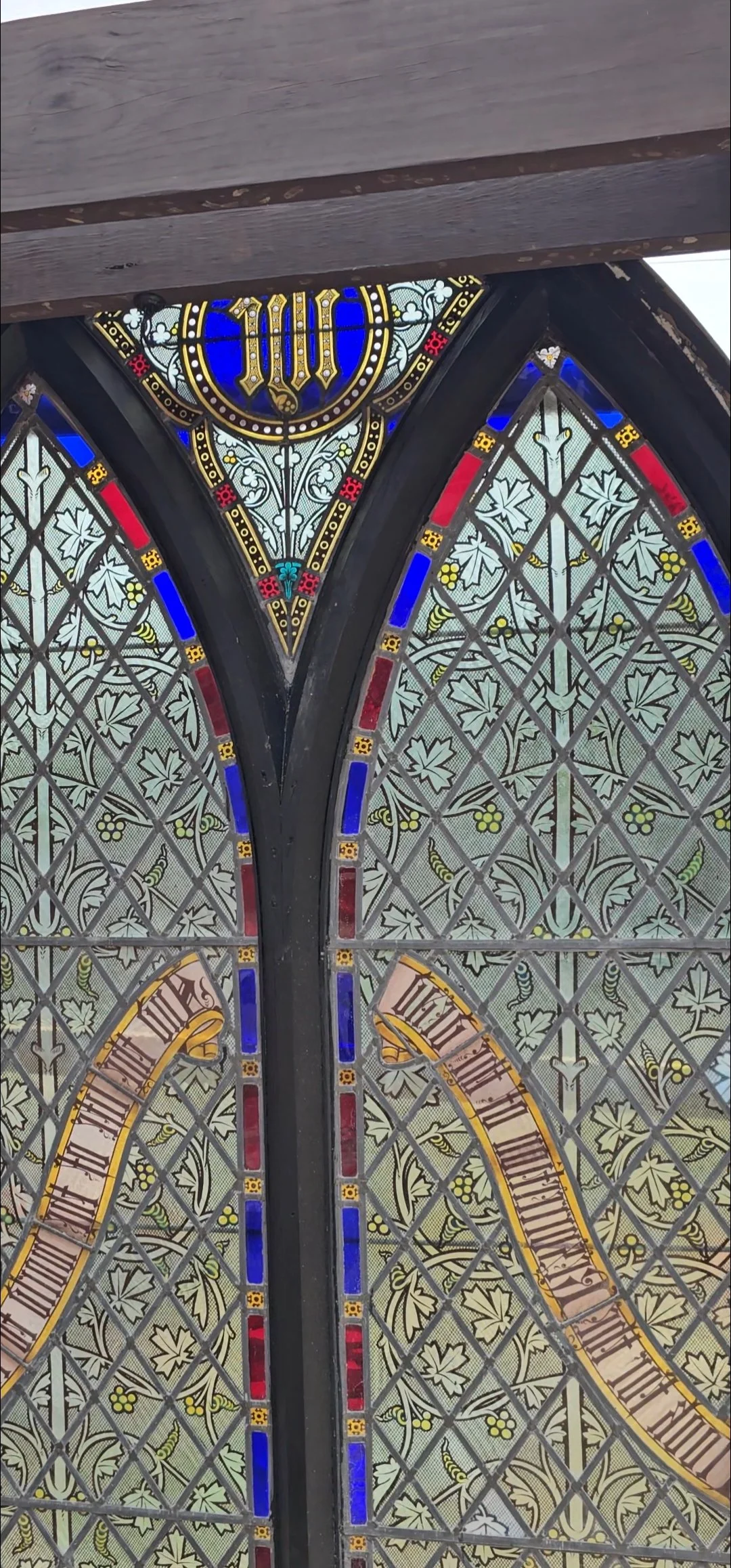
Antique Grisaille Stained Glass East Window from Christ Church, Maugerville, New Brunswick (c. 1856)
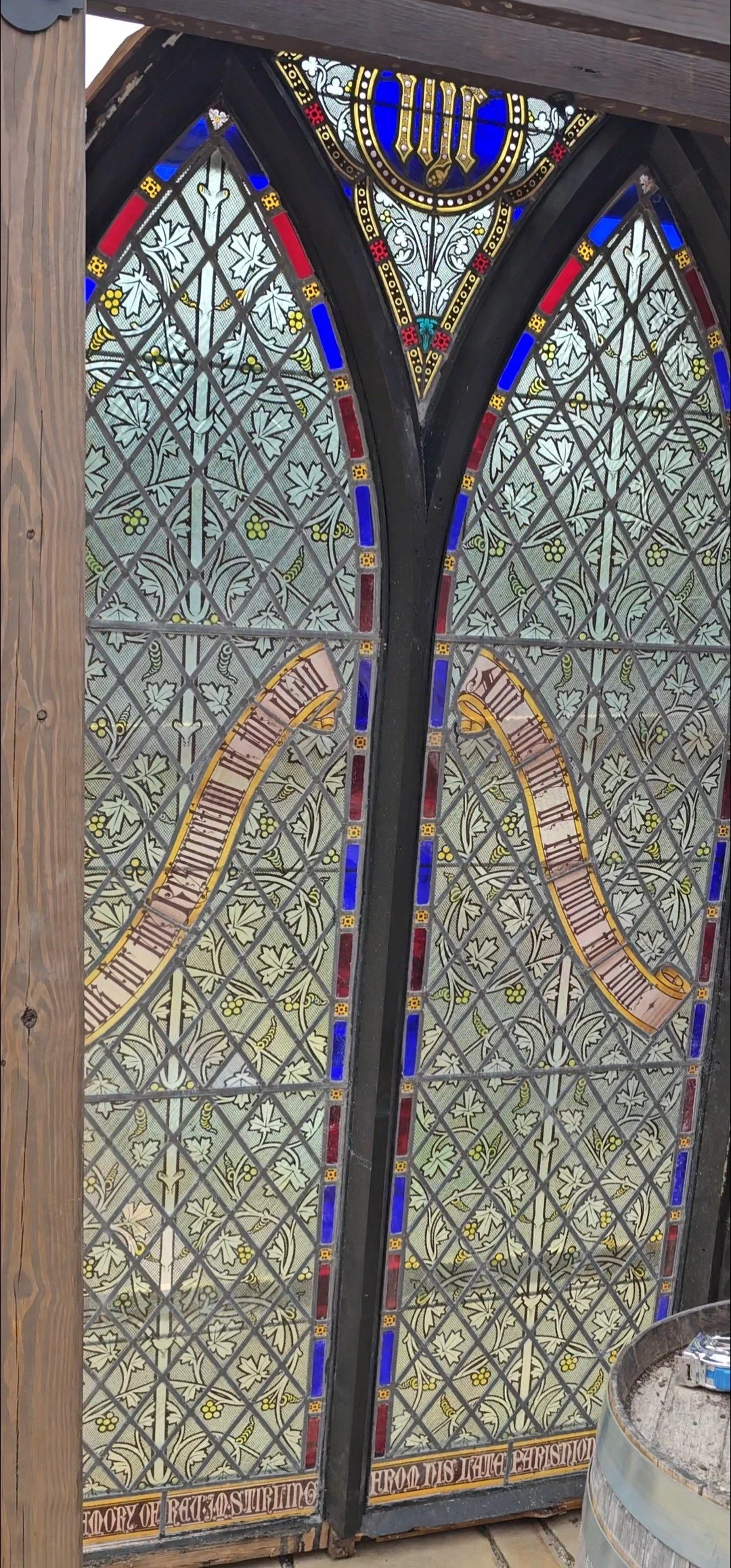
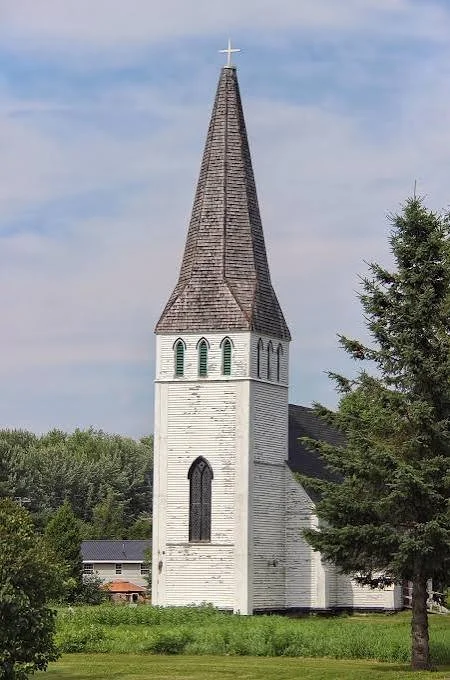
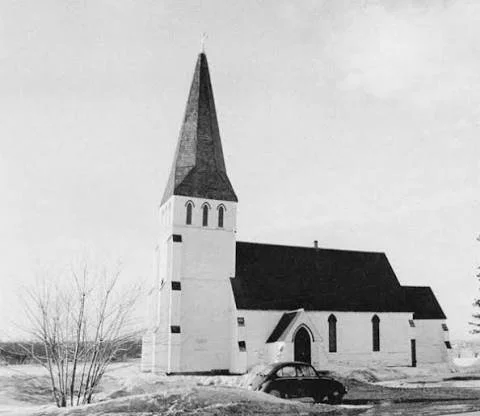
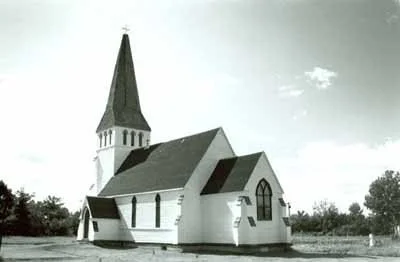
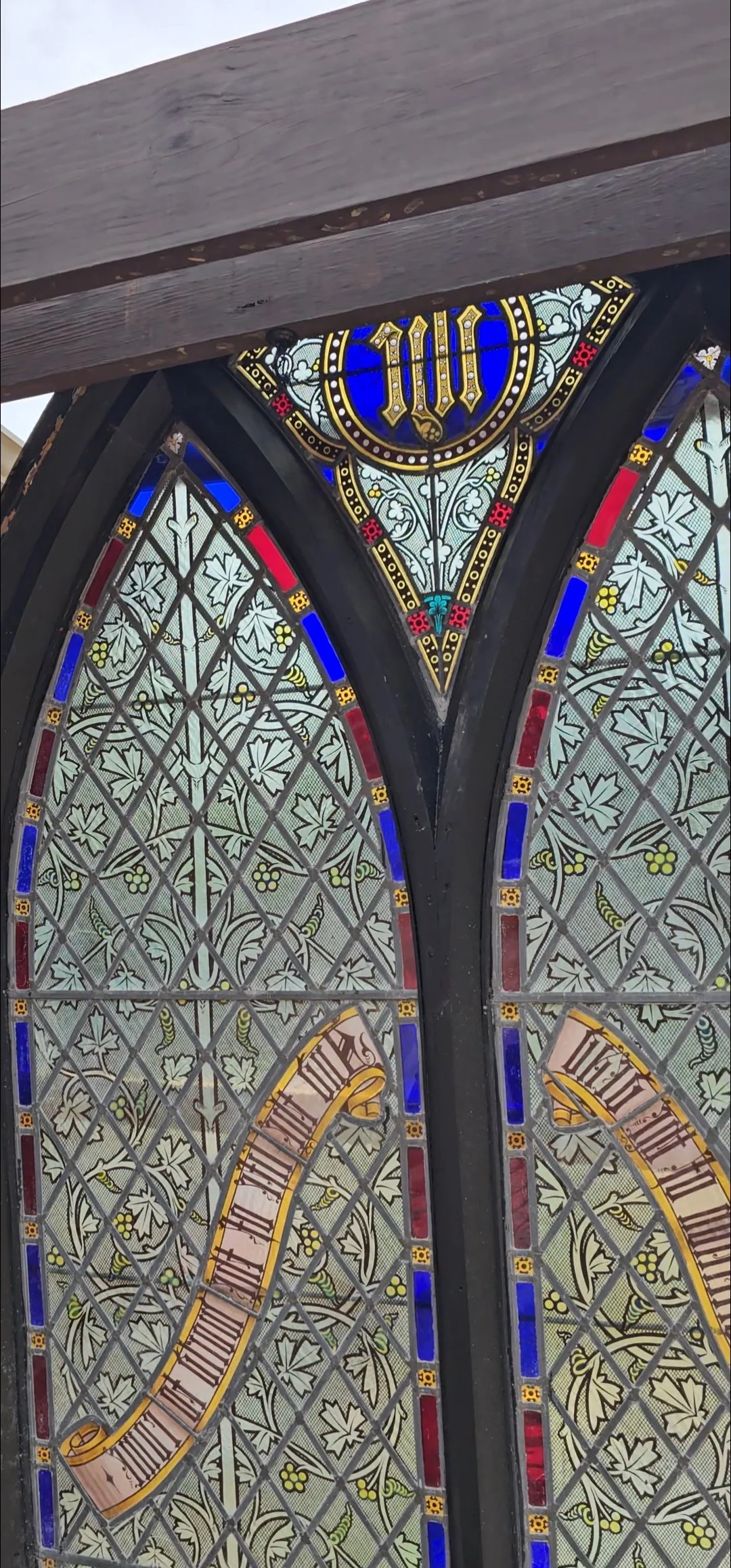
Elegant mid-19th-century grisaille stained-glass window removed from the east end of Christ Church Anglican, Maugerville, New Brunswick — a National Historic Site of Canada. This was the principal east window of the church, larger than the flanking windows and subdivided with characteristic Y-tracery.
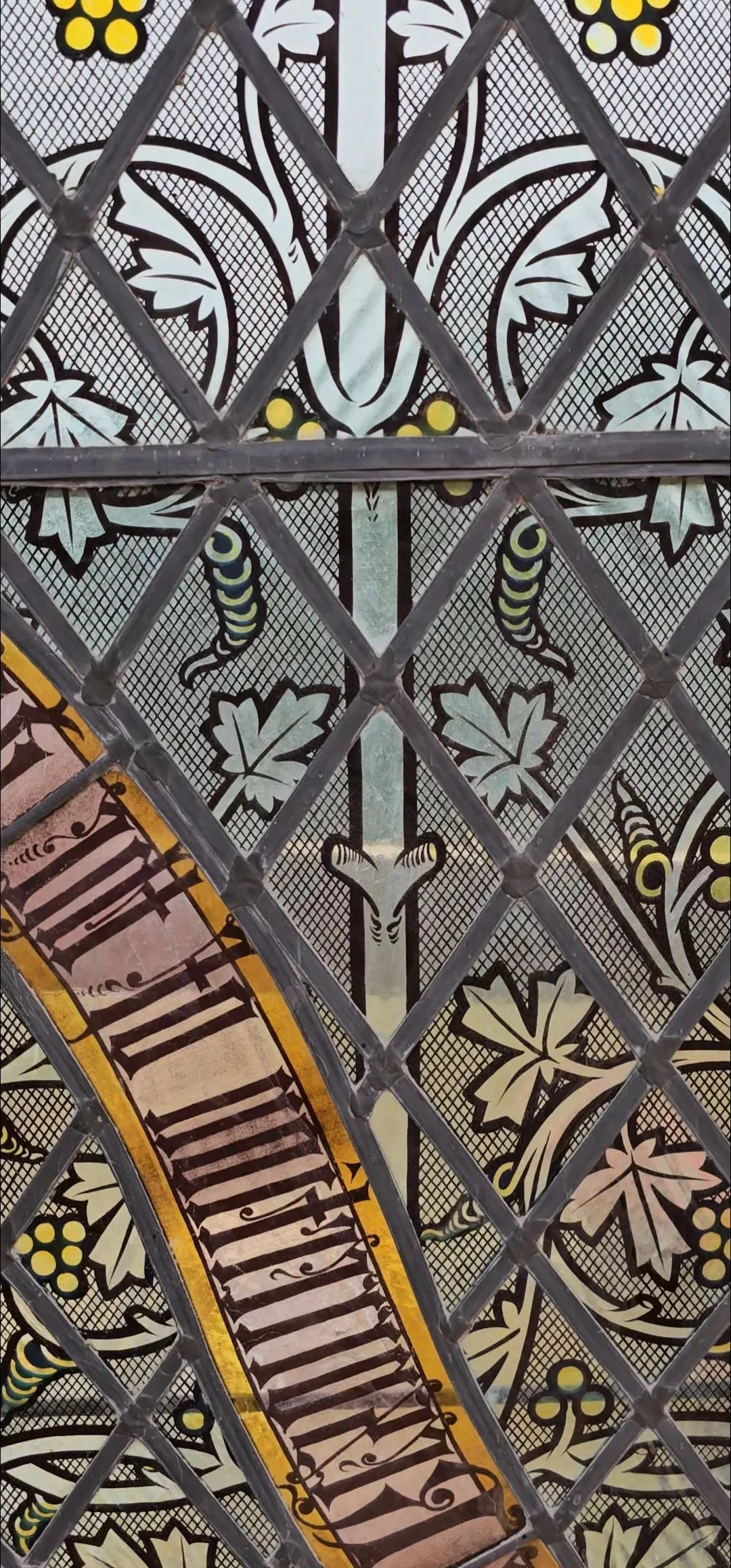
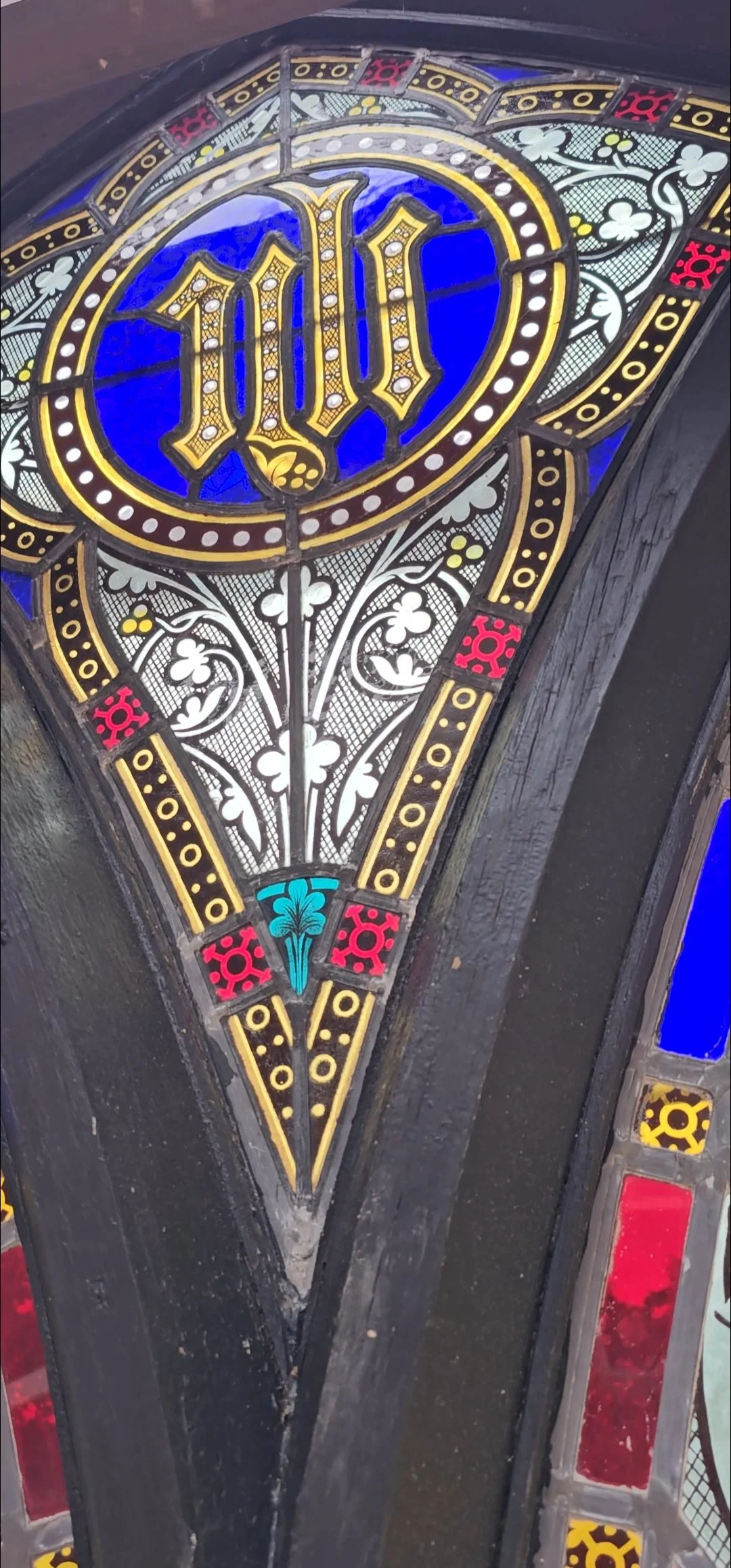
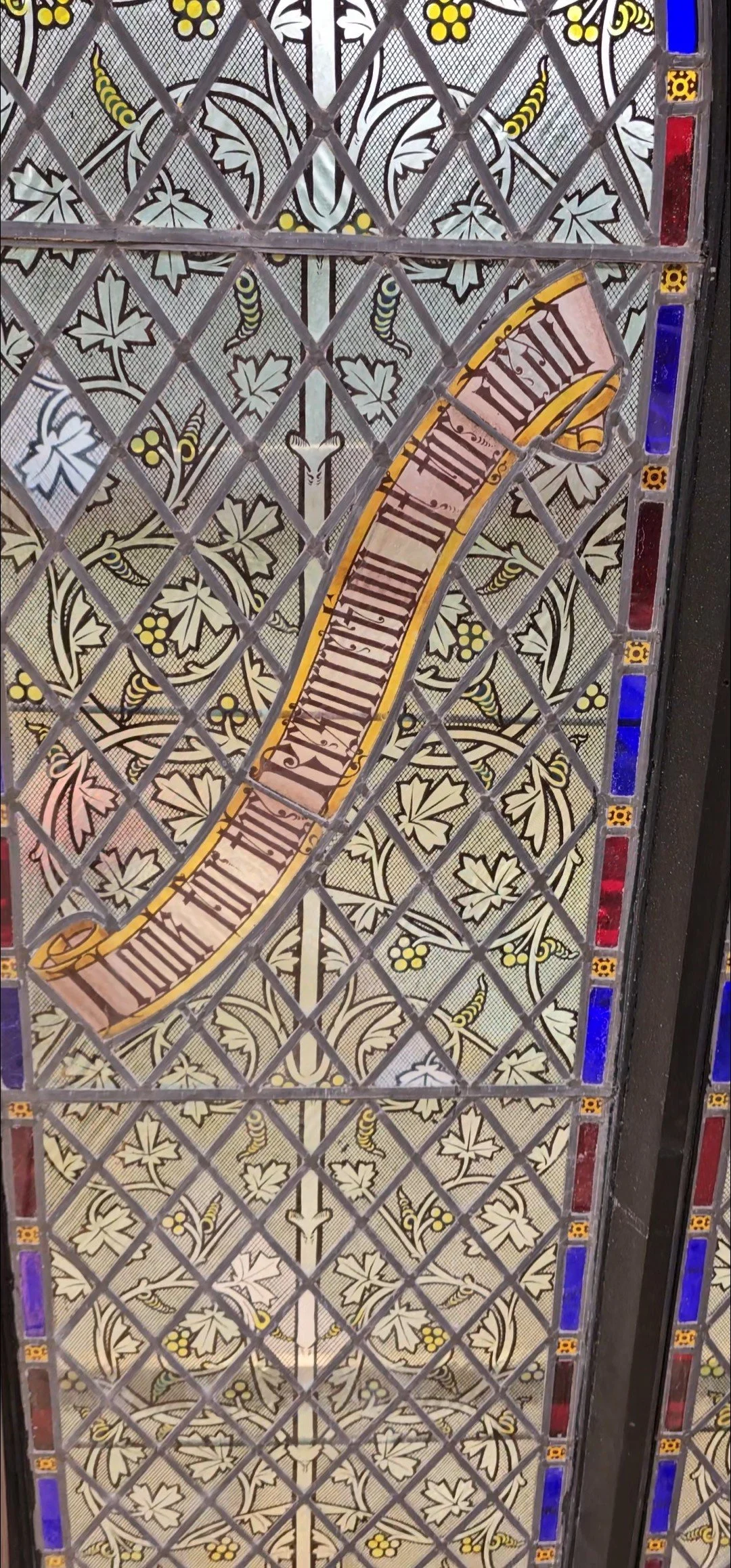
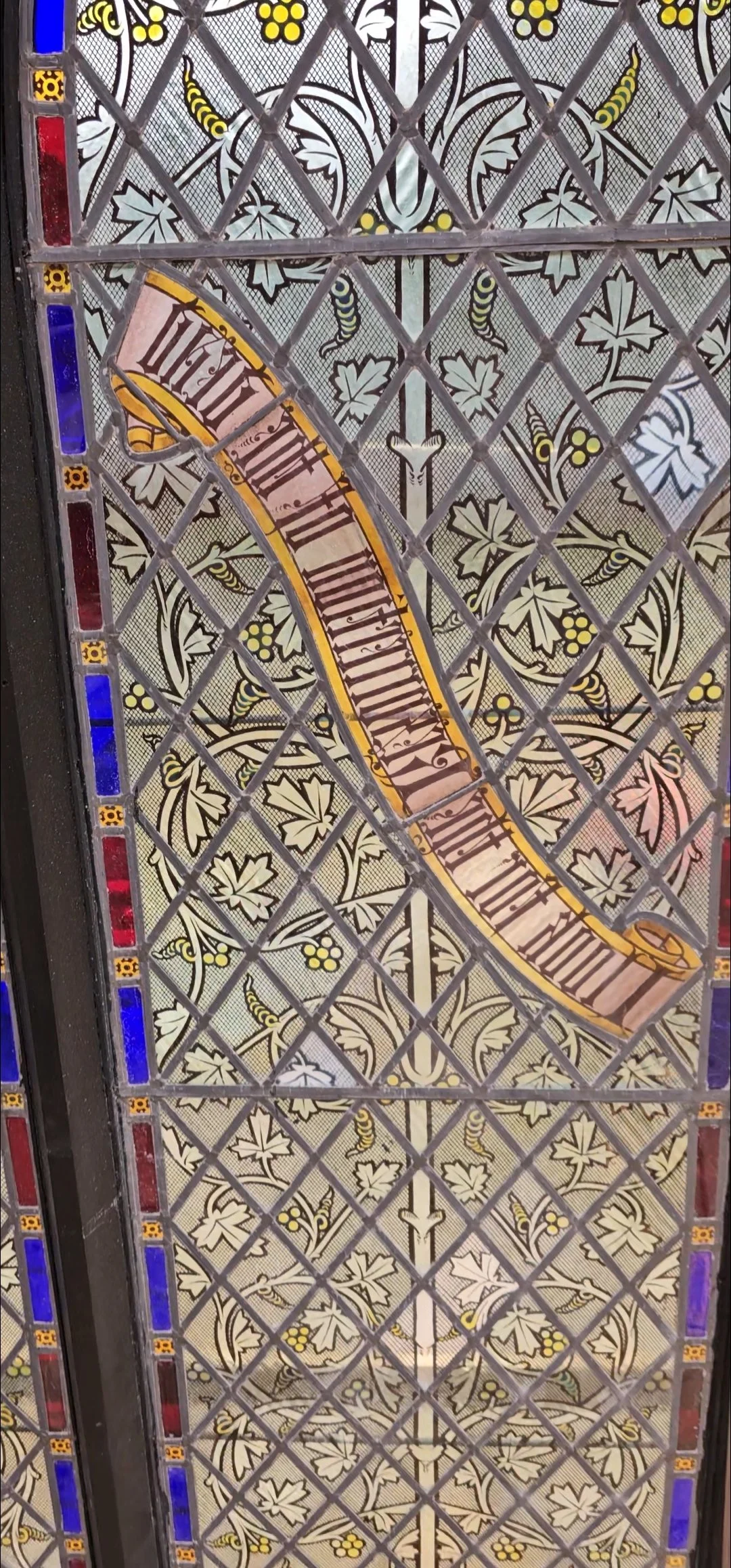
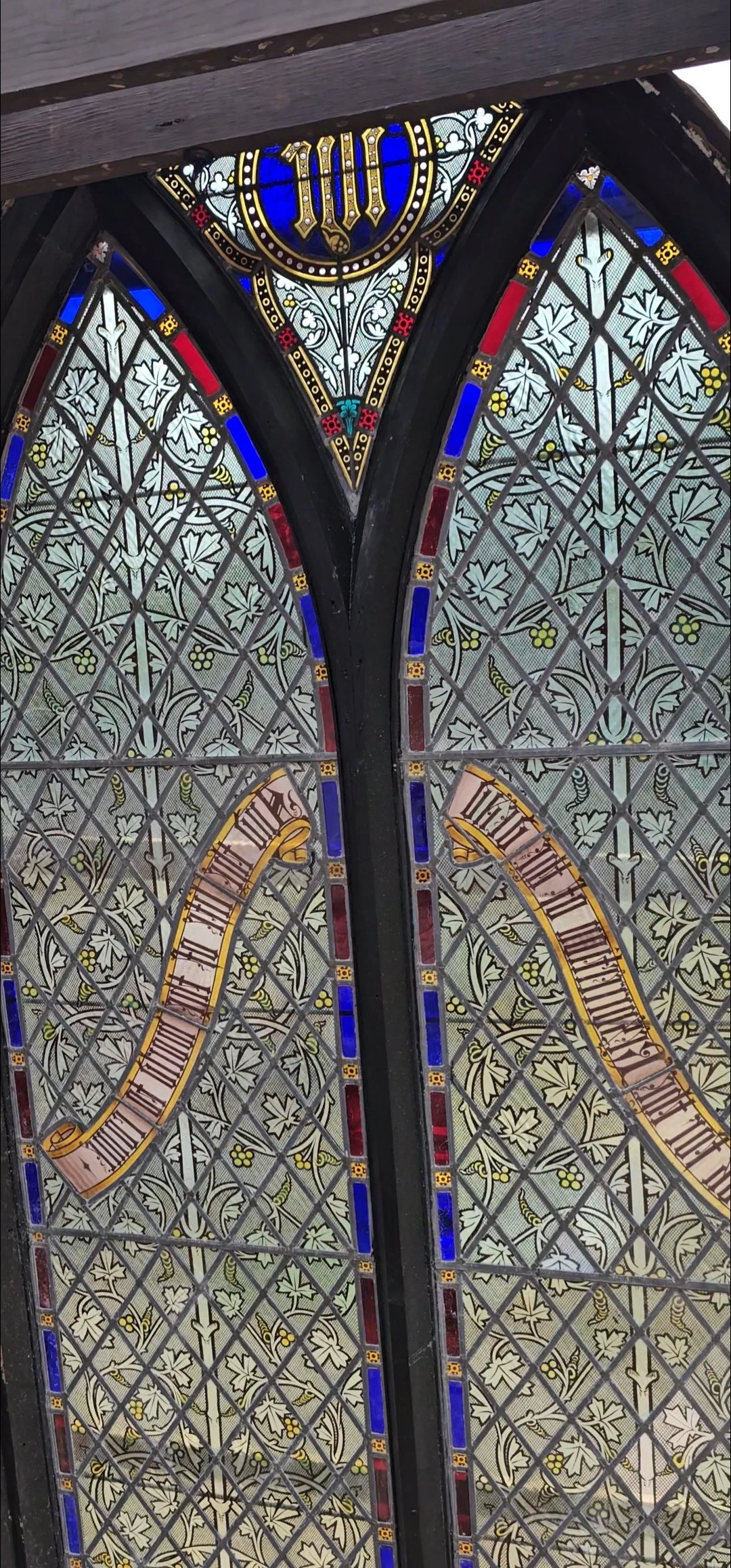
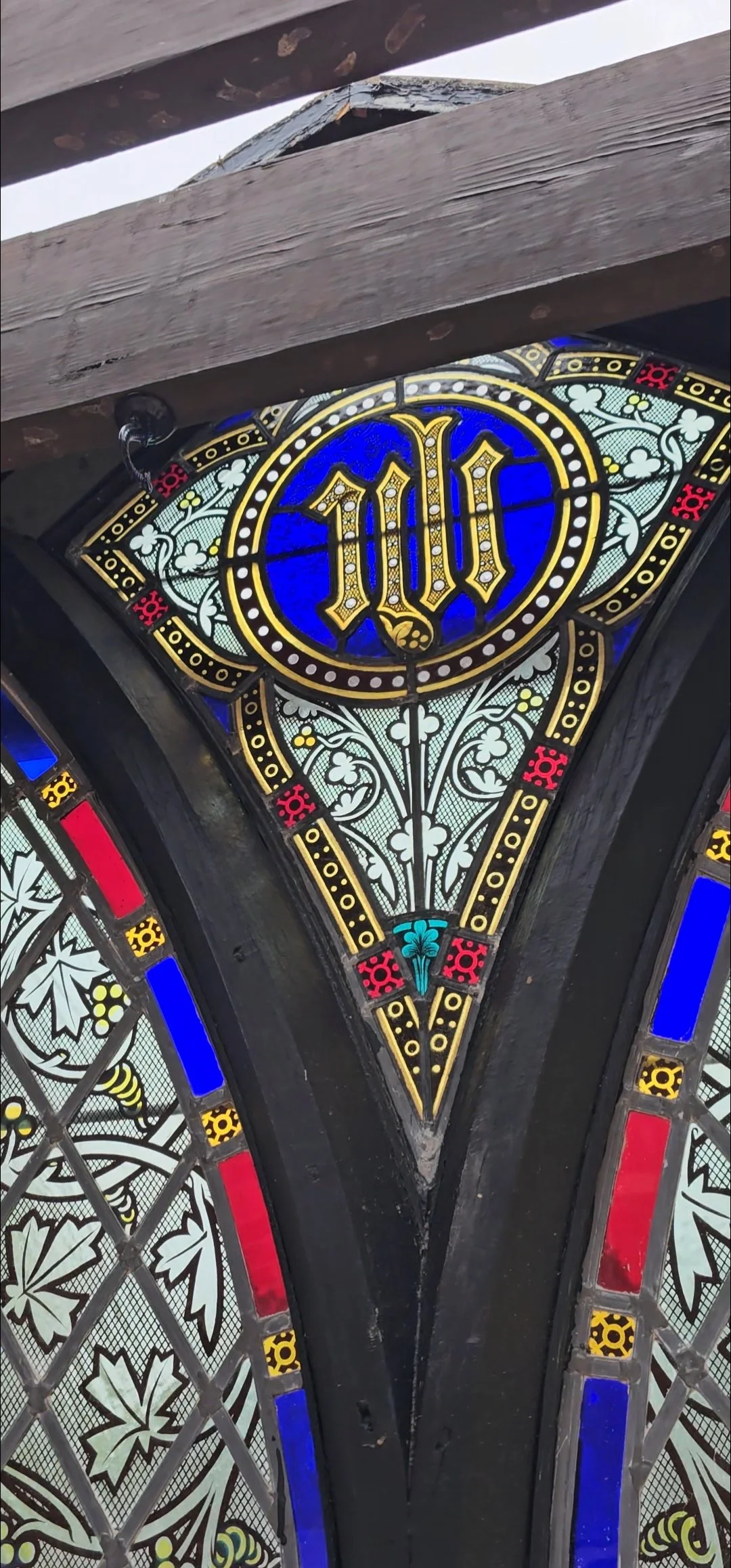
The window features a pointed Gothic form with two main lights under Y-tracery, topped by a decorative panel containing a central circular medallion with the sacred monogram “IHS” (a traditional Christogram) set against a deep blue ground within a gold-bordered frame. The main lights are filled with diamond (quarry) glazing in soft grisaille tones, painted with delicate trailing grape vines. Two elegant curved inscribed ribbons or scrolls sweep across the lower portion of each light. The overall effect is restrained, luminous, and typically Ecclesiological — prioritizing pattern, light, and symbolic restraint over richly colored narrative scenes.
History & Provenance
Christ Church, Maugerville, was constructed in 1856 and consecrated by Bishop John Medley on 8 January 1857. It is a rare and particularly successful example of a wooden Gothic Revival parish church built according to the principles of the Ecclesiological (Cambridge Camden) Society. Designed under the close supervision of Bishop Medley (first Anglican Bishop of Fredericton and a leading advocate of “correct” medieval-inspired church architecture), the building is attributed primarily to diocesan architect Frank Wills, with possible influence from drawings by the prominent English Gothic Revival architect William Butterfield.
The east window formed part of the original 1850s fabric. It is described in architectural scholarship (notably Malcolm Thurlby’s 2013 study in the Journal of the Society for the Study of Architecture in Canada) as the largest window in the church, filled with grisaille glass and consistent with the building’s Early English Gothic character and the Ecclesiologists’ preference for appropriate, relatively economical glazing in parish churches.
After a flood the church was deconsecrated and scheduled for demolition. Soon after the window was removed the church was further destroyed by arsonists.
The window (including frame) approaches 10' tall and 5' wide.
The maker is attributed to Robert Beer (Beer studio, Exeter, England)